Jul 18, 2008

........of 'WAYANG', 'PAADAM' & 'BEIJING OPERA'

Our ‘Wayang’ (free film entertainment) shows in the Sixties was the weekly outdoor Tamil Movies (‘Paadam’ in Tamil) at the adjacent Rubber Estate, and the unscheduled visits of the Government Propaganda machine - The MFU (Malay Film Unit) outdoor Mobile Film Shows. However the MFU film screening was not so much of real film shows, as the newsreels were often interrupted by the Information Officer lashing out ‘recycled’ Government Messages. Even then the whole Kampong Folks from the Malay Settlement would throng the venue not so much for the film show but for the latest information from the government. More so, it was The Penghulu’s wish that all residents should adhered latest government information, for their own benefits.
There was also this staging of the ‘Wayang China’ - Beijing Opera at a local Chinese Temple. Normally it was a ‘one off’ event organized by the Chinese Association to appease the Gods, so we were told. Teenagers like me would not miss the opportunity, though most elders dismissed the shows as non Islamic. More so it was a religious obligation for our Chinese neighbors they felt we should not interfere.
But my love for the theater, make me one of the ardent admirer, and an observant fan of the Beijing Opera. I would give all the excuse to my parents to be out each night for the opera shows. I was taken by the well managed stage direction and the presentation techniques of the production team. Each night show was different in directorial style with the other. The productions were well stage-managed and the shows flawless. The eloquent delivering of the dialog or songs and the expressive performances of the actors or the actresses with their calculated playacting moves either on a somber mood of  'romancing the beauty of the landscape with adjacent hills jutted with high cliffs’, or in the scene of ‘the tranquil forbidden garden of the wicked Empress’, more so 'the bloody and the aggressive battlefield scenes of the conquerors' that frenzied us to the out most. The swing of the sharp weapon, the artistic animated move enhanced by the sound effects from the beating of cymbals and gongs, the staccato drumming of drums accompanied by live music, too surreal to the ardent audiences.
Even though the storyline and the dialogues were foreign to us Malays, the colourful staging of the opera i.e the extraordinary traditionally designed costumes, the heavy make ups, the lighting effects, the vocals and the dancing, the red cheeks chorus girls of the ‘extra turns’, the comedies and the tragedies of the historical epic staged befitting the real live revival of the historical periods. For me watching the shows all season was like a period of my theater study apprentice attachment. As a result till present day I become too observant for details of events in the same manner I enjoyed the professional staging of The Beijing Opera at that Chinese Temple near my village, long time ago.

…………..

Watching the ‘so called’ high profile DEBAT over BRTV (Bernama TV) a couple of nights ago (15th July 2008) between PKR De Facto Leader Dato’Seri Anwar Ibrahim and the newly elected Minister of Information, Dato’ Ahmad Shabery Cheek reminded me much of the 'impressive' performances of the Beijing Opera actors portraying advancing combatant Generals with full battlefield costume outfits I watched some 50 years ago as a kampong lad.
Although the bulk of the story line and the historical facts of the Chinese Historical Epics were alien and difficult for me to fathom then, or interpreting the Tamil Film hero MG Ramachandren and his comedian sidekick Nargesh, wooing the daughter of a rich Landlord, the storyline of which was also foreign, we enjoyed interpreting their overacting bits and well rehearsed gestures, mimic and moves.
But unlike the 60 minutes DEBAT (alas the station availed 3 “door slammers” of 3 minutes duration of commercial spot breaks) we the audience fully understood the issues upfront as they were current and spoken in our National Language. Surprisingly, what we could not fathom was their body language and the sparring part, the concept of the production, their way of dressing, the setting, the décor, the format as well programmed treatment and running order. For once I thought the production was apeing the concept of the televised current American Presidential Campaign Debate telecasts live by CNN, only that it lacked pomp and luster.
So what did the DEBAT left us.
It reminded me of our ‘Wayang Time’ way back in the sixties. Those WAYANGS although entertaining but were full of farce and false pretenses. Our two confronting generals (Dato’Seri Anwar Ibrahim and Dato’ Ahmad Shabery Cheek) presentation look like there were on two different planes working on 2 sets of data aka aliens from two different planets, trying to save mankind from impending disasters that we know best to counter. They looked confused and uneasy. Were they reading from prepared scripts with some form of ‘ad libbing’ here and there? That was how it looked like (pardon me for my arrogance). Also the well structured program format was of no help either. I presume each segment was timed to the second to give way for commercial break. The Production was too clean for a live and unrehearsed discoursed from 2 opposing politicians. Even school debates would be more provocative, riotous in nature as the issue discussed was of importance to the nation. Dato’Seri Anwar Ibrahim known to be an orator capable of breathing fire of provocations on all his streets rallies, looked lame like a ‘lion in winter,’ at time haggard and sometime seemed accommodating. His apathetic smiles and casual dressing with over sized sagging jacket did not help much in positioning and uplifting his stage image. Dato’Ahmad Shabery on the other hand looked a bit under dress on his dark suits without his tie. His performance was like a young half groomed actor with a badly written script. His unmotivated moves at times resulting to his vocal fell flat. Unlike Dato’Seri Anwar, the Minister of Information has no experience ‘acting for the cameras.’
(I suggest IPTAR – Ministry Information’s Institute Penyiaran Tun Abdul Razak could design a special course for the new politicians, more so for the present bunch of parliamentarians. This is no joke, as in over developed countries upcoming politicians or spokespersons need to master the skill of appearing for the media, playing gallery and charmed the public as the trust of their voters are judged on their outstanding personality, performances and ‘good press’.)

……….

So much with the DEBAT, now back to the ‘WAYANG’ or ‘PAADAM’ or 'BEIJING OPERA' play acting.

MGRamachandran not only an icon of the Tamil Movies in the Sixties and the seventies, but also a successful South Indian politician. He was the Prime Minister of the State of Tamil Naidu for a long term. There was this short film entitled The Phenomenon of MGRamachindran. It was shown by delegates from India in a Short Film Communication Seminars organized by Thamassat University Cheng Mai, Thailand which the scribe attended sometimes late 80es.
The Short Film was about the nagging problems the down turned of MGRamachandran’s political career. His charmed as the film lover boy was dwindling, and his camp need to do something to reposition his popularity to his electorates. They researched on all the good things he portrayed in his films. They found out, of the hundreds movie titles MGR acted as hero, never ever he lost a fight except once in a comedy skit with his sidekicks Comedian Nargesh. They decided to capitalized on it and created media frenzy on rumors that they had been for sometime in loggerhead over some leading actress. So one fine day while MGR was on one of his election campaign trail they stage-managed a fight which saw his onetime sidekicks Nargesh attacking him. Later the photograph of MGR with his ‘broken right arm’ in the sling was distributed in all his political rallies to his fans and followers. The short film was also screened in his other election campaigns. In no time the team had successfully maintained their leader’s popularity

……..

All in all the DEBAT akin watching some playacting stunts on films or stage shows. I truly believed if any qualified politicians choose to play acting in the world open stage, he or she could enhance his or her popularity standings (or political diversion) to the masses if stage managed properly.
But most of our political aspirants are neither (true) actors, nor (qualified) politicians. Some even make a mockery of themselves in Parliments. Imagine another DEBAT of this kind involving those, where do we end up.
A"Flip-Plop' society?
That’s all folks. I now rest my case. Have a good day.

Jul 9, 2008

THE RURAL POOR

Life was simple in the Fifties. At least for my Kampong folks from The Malay Settlement, for by virtue of our Malay descends as ‘the native son of the soil’ (kaum Bumiputra) we were categorized as Tuan Tanah/Land Owner - ‘Small Holders’ as against the vast Estate Plantations owned by European Planters. Most accepted it as honorable standings, that the British Colonial had positioned residents of The Malay Settlement as among the ‘well off’’ well above the ‘have not’ – the poor, the ‘landless’ or laborers in some Rubber Estates or Tin Mines.

Thus it was stated in my school record Father’s profession was that of a Land Owner or Tuan Tanah – a Small Holder, though I knew very well he was not. I remember our early dwelling was on an ancestral plot less than half an acre in size, known among the family circle as Tanah 2 Baris situated at Parit No 23 (Baruh). The plot consisting of two rows of coconut palms, left by his parents to be shared with his other 5 siblings. When his sibling sisters grew up the plot was too congested for their families housing needs. Father opted out. He moved our dwelling to a rented plot ¾ miles away at Parit 25 (Tengah).

It was on this rented plot that Father started his retail business, by means of ‘barter-trade’. Those days’ provision goods were exchanged with agricultural produce, as real cash was hard to come by. A lucky day’s cash sale saw only a couple of Ringgit turnover. Instead, we had loads of coconuts and other agricultural produce in his makeshift store next to father’s shop house. Later Father positioned his business as a local copra producer. He afforded himself with a Coconut Kiln taking advantage of the abundant supply of coconuts from The Malay Settlement.

His business was good and a couple of years later he enrolled me for English Medium Education in town. By now he could afford the monthly M$2.50 school fees plus other hefty consolidated and book fees. Time was hard then. It was easier to attend Malay School for free then going to town for English Education, expensive by local standard. You are lucky having an extra pair of school uniform on the first month of school, as there were other fees payments taking precedent. Nevertheless, Father has made his decision and the family must support.

I remember at times Father pawned Mother’s only jewelry for my school expenses with the promise he would redeemed them soonest. Mother did not mind the arrangement as long as Father fulfilled his promise. Mother reminded Father, that pair of gold bangles was her only prized possession left to her by her late mother. The only occasion she worn them was during her wedding ceremony with Father. Since then the jewelry was in some secret closet for safekeeping. Mother agreed, pawning them as collateral for my school expenses was a worthy cause, and through out my school days that pair of jewelry was my parent’s only valuable collateral for cash.

I owed them my heartfelt gratitude for their efforts and sacrifices.

(As time passed, I lost tract on that pair of Mother’s gold bangles. I presumed that after father’s death at the prime age of 52 in 1960, the pair of gold bangle was still lying in the pawnshop in town waiting to be redeemed. And no way Mother could redeemed it. Or on the night thieves burgled our house a few month’s after Father’s death stole all valuables including that pair of bangles. I believed the former. )

Now at 67 some 48 years after Father’s death, and as I enjoyed the luxurious view of the effluent Lembah Klang from my Penthouse Office at Cosmopolitan Square, Damansara Perdana, I realized how much things have changed for me. I am no more a village lad but an urbanized person, living in the comfort of a developed society. Gone are my simple rural livings in The Malay Settlement with Father, Mother and five siblings. Time passed by and I very much missed them. Had not for Father’s vision on my sound education and Mother’s sacrifices all along, I will not be what I am today. I would be growing up in the Malay Reserve Land, a dropout surviving with whatever odd jobs availed, like most of my other colleagues deprived of proper education. Most, to this day are still living on meager income. Some are in the bracket of hardcore poor living on the same plots left behind by their ancestors.

Sadly after 50 years of Merdeka and self-ruled my descendents in The Malay Settlement, the once acclaimed Tuan Tanah/Land Owner by the Colonial Master, are but a bunch of hardcore poor. Merdeka means nothing to them. It has not changed much improvement to their livelyhood. The existing infrastructure was no better than those left behind by the colonial master, some 50 years ago. And so are their life stories, that of a never-ending tales of hardships for ‘the son of the soil.’ – kaum bumiputra.

Until present time, I feel no stranger meeting them as I travelled the 30km stretch of coconut plantations covering the length of the Malay Settlement. Nothing changes, except some rundown buildings and some old coconut palms swaying in the evening breeze of Selat Melaka. Some occupants are still around, though most of their elders had passed away. We still remember each other’s first name, that of their siblings and the name of their parents and grand parents. Nothing changed much. Their (Rumah Kotai) ancestral homes like mine once the landmark of each family plot, still remained but lack luster, ruined with times and not fit for living. Others left unattended, and a few like Father’s Rumah Kotai, rented out for cheap.

The Malay Reserve Settlement itself was in dire state. After Merdeka as the demand for copra slacks, most moved out making their livings elsewhere. Those who remain in The Malay Reserve heartland opted to other means of livelihood by becoming odd laborers or inshore fishermen….or unemployed poor. Alas, to this day they are the still left outs and the hardcore rural poor.

Jun 15, 2008

A GIRL NAMED RIA


There was this girl named RIA. I stumbled into her in the ruins of Angkor I visited a couple of weeks ago – on 1st June 2008. She was there tugged in a corner amidst hundreds of foreign tourist that thronged the infamous historical sites of Cambodia. She was around 10 or 11 and of the same age as my two granddaughters Nurul Aifa and Nureen Hana. She was alone, and I presumed she was a local.
On the first glance I mistook her for an art student from a local institution doing some school projects. But she was there all alone, minding her own business, sketching rigorously on a worn out exercise book. Was she an art enthusiasts, or merely one of those street urchins trying to woo tourists with her sketching prowess for a couple of Riel or Dollar? My guess was almost right when a couple of Japanese teenage girl approached her corner, eager on what she was sketching on.
She was actually sketching one of them. It was a quick sketch job. She initialed her name on the caricature and handed it over to them. The 2 Japanese girls overjoyed. They giggled as they shook her hand. For that moment they were close, like bosom friends on an outing. I later help to photograph the three.
There were lots of street urchins at most of the historical sites. There were there, selling their wares. They would crowd and harassed those naïve visitors until you part with your dollar or Riel for a pair of bangles or other trinkets made of beads. Those were the nuisance lots. There were also street children scavenging dustbins looking for plastic bottles or empty cans. It was really a depressing sight looking at those half naked kids collecting discards, some to the point of eating any leftover foods found or quenching their thirsts from those salvaged bottles or canned drinks.
But this girl named RIA was one with a different. She was neatly dressed and well composed. She neither harassed the visitors nor scavenging the throw-outs. She sketched simple caricatures and passed them to those who find time to befriend her.
Her simple nature and kind smile for the moment urged me to get to know her. And as I approached her, she spontaneously handed me her latest sketch. It was a multi petals flower, with a butterfly hovering over it. The sketch was simple and neat.
For the moment I took it as a symbolic gesture of friendship. The initial RIA is prominently displayed on the top right corner. RIA in The Malay Language meaning gembira, girang, riang, sukacita ( joy,happiness). For whatever its true meaning was, the name RIA fitted her personality. The multi petal flower maybe bunga cempaka or chempa to the locals. Melayu Chempa originated from Cambodia, and hence bunga kemboja widely flourished in the country as well in Malaysia. Is she of the Malay origin?
I took a snapshot of her for my 2 granddaughters. Little did I know Nurul Aifa and Nureen Hanna had met her earlier, and was sketched. Like me the two were proud of their find.

Flashback: I recalled my early association with a Malay Chempa from Cambodia, was with actor, filem producer director Ismail Sasakul. We met in Kuala Lumpur at my office in Angkasapuri when I was The Head Of Drama, RTM (Radio Television Malaysia) in the 1980es. Earlier he had established himself locally as an independent film director. He was first based in Marang, Trengganu, later in Negeri Sembilan. Ismail Sasakul was a soft spoken and a kind man. He escaped to Malaysia with his families from his war-torned country, and found shelter in Kampong Kelulut, Marang. We were not in contact for a very long time since then. I believed either he or his family are still in the country or had been shipped back to Cambodia by The World Amnesty Organizations.

May 5, 2008

'Much Ado About Something..?!!!.'

Hello -


8 weeks had passed PRU12th; yet the frenzy political bickering on the election aftermath still on high note.


The PRU 12th spinoff had been full of anticipations and surprises to most – the losers as well the winners. Never before in the history of Malaysian Post Elections, had I seen political divide amongst politician in their respective party and components auguring an unassumingly political polemic far beyond the election campaign. Backbiting, finger pointing; witch-hunting has been the order, of the whole month. Firstly most BN leaders and supporters seemed not to be able to cope with the coalition unexpected loss, only they are gentlemen enough for not ‘labeling the election as fraud, commonly used by loosing political parties worldwide. Secondly PKR,DAP as well PAS leaders ardently positioned themselves as power crazy lots: recklessly and relentlessly perplexing their muscles, trying to scrap policies put in place by the previous government. In doing so they sometime crossed sensitive boundaries.


The election aftermath affected the nation tremendously. Never had I saw people from all walks of life joined in the political frenzy whenever they congregated with each having a few political telltale to contribute.


Rumors fill the air, spreading from words of mouths spurred by irresponsible postings from alternative media i.e the internet, telephone SMSes and from (what I termed as) ‘mosquito’ tabloids. They spread like wild fires, divulging in maliciously revealing, vindictive, nasty and cruel accusations pinpointing on certain sensitive issues that are close to the people’s hearts. Those (so-called) rumor mongers played to their gallery well with their spiteful concoction of tales continuously feeding the hungry ears of their listeners.


To the man in the street, Malaysian Politics has brought about telltale flip-plop fictional dramatic underscores. Much ado about nothing’. They saw claimants or those aspiring young Turks, relentlessly trying to prove their worth by maliciously accentuate spiteful accusations on other aspirants, even within the same party. Some brave enough demanding their tested leaders to step down, all in the name of politics.


Are they the true upcoming leaders of the people, or merely a band of hopefuls looking for better pastures in the name of (Malaysian) politics. To me they are neither a maverick nor an opportunist…..some even having the essence or quintessence of a scoundrel.


So who the true leaders are?


I had bear witness to all the country’s PRU as a citizen and a Public Servant. I had indirectly or directly involved in most of them. Right from pre Merdeka periods Malayan Politics had underscored its roles for the nation’s democratic way of government. Our independent fathers had successfully charted the way to nationhood vigorously rejecting unfitting doctrines and other influences not fit for the nation. We look up upon these leaders as icons, nationalist, and mavericks. They were the freedom fighters and compatriots who relentlessly championed the country as a free nation We adored them for their patriotism and esprit de corps within diverse political parties and racial associations. Together they diversified their efforts uplifting the spirits of nationhood in their struggles for independence. They came from all walks of life from royalties to the ordinary peasants. They are the leaders of the people and for the people. Their opportunistic leadership style on nation building has always been for the benefit of all.


Fifty years of Merdeka, Malaysian on the whole has become an affluent society. The road to nationhood had brought about vast opportunities for improvements on all. The well structured social and economic developments of the country rightly positioned the nation as a developed developing country. Also, fifty years of Merdeka, Malaysia saw the growth of its young populations by leaps and bounds. They are well educated lots. Most are computer savvy and very knowledgeable on Information Technology. They are the citizen of borderless world of today.


Now back to post-election frenzy.


PRU 12 unprecedented results has created political overture countrywide. Never before after May 1969 PRU, Malaysian Politic being put on the stand for citizen’s review. Political pundits are having field days analyzing Malaysian political stature. They took the trail to find out, ‘where do we go wrong.’ At the end of the day, no affirmative result concluded, except for some of their wildcat calls that the country should embark on this and on that.


The most interesting was the resolution adopted on the formation of The Council Of Malay Solidarity at a special Congress on Malay Solidarity in Johore Bahru 1st week May 08, spearheaded by GAPENA and attended by about 200 Malay NGOs. Its main aim to further Malay interests against what they view as challenges to KEDAULATAN MELAYU or Malay Sovereignty. That Malaysia’s existence is founded on the principle of KEDAULATAN MELAYU in opposition to ideologies such as “Malaysian Malaysia’, multilingualism, multiculturalism and religious pluralism, they claimed had become more prominent since the 2004 election. I agree if it’s a wake up calls for the Malays and ordering them to buck up. And to achieve we the Malays must afford a sound national political agenda to substantiate them. Have we?


On this issue the onus is on you – anak MELAYU.

Apr 7, 2008

The Unfortunate Few

I must admit autism was unknown to most until the end of last year when The United Nation’s 62nd General Assembly designated 2nd April as WORLD AUTISM AWARENESS DAY.
April has always been a special month for me. The 1st week of April used to be a busy week for me. Firstly, I would always be cautious on the emergence of 1st April worring someone would send me on fool's errand as the 1st of April is April Fool's Day. We in RTM observed the 1st April as the birthdate of Radio Malaya estblished on 1.4.1946 (later known as Radio Malaysia and RTM-Radio Television Malaysia) my place of work for some 30 odd years; starting as a Radio Broadcasting Assistant in 1966, till my mandatory retirement date on my 55th birthday - the 4th April 1996 as RTM Managing Director.  Therefore I have reasons to note all the daily happenings of most of the 1st week of April each year as important events in my dairy.
So for this Ist week April blog posting, I like to dedicate my thought to my special childhood autistic buddy - in conjunction with the 1st WORLD AUTISM AWARENESS DAY.
We spend most of our childhood together in Kampung Tanjung Bayan. He was a year older and we were bosom friend. The last time I met him was during my Aidiladha Korban & Open House Celebrations at Surau Kampung Parit 25 Baruh, Tanjung Bayan, December last year.
Our early acquaintence was in 1953. I was 12 years old, and a new intake to the Govt.English School, while he attended the neighbouring Malay School in Hutan Melintang. We became buddies. My family home was in Parit 25 Tengah where father operated his Provision Shop on a rented lot belonging to Haji Ibrahim his uncle. A single mother brought up Basiran. They lived in a small hut, downstream at Parit 25 Baruh. His mother Makcik Saerah a woman of not so many words. She and her son Basiran always mind their own business and keep to themselves. The family did not go well with some kampong folks. Basiran and her mother were easily labeled as 'mereng' - insane. I believed then, if autism is not hereditary then Makcik Saerah maybe facing a traumatic life, being a single mother living in poverty. Wallahualam.
According to father, Haji Ibrahim inherited a big portion of their late parent’s property leaving Makcik Saerah a small lot enought for her depilated dwelling – a small hut only fit for 2. It was during December School Term holiday Basiran came to stay at his uncle’s place. He was forced to spend the term holidays clearing Haji Ibrahim coconut plantation next to my father’s rented plot. As a 12 year old, I could understand that Basiran could not effort the heavy duty clearing the undergrowth single-handed. It was a Man’s job, as the undergrowth was of thick 'lalangs' dotted with 'pokok kelubuk' to the height of more than 10 feet. Haji Ibrahim explained that was a way to train his nephew to be the breadwinner of the family and a responsible person. Father believed otherwise. Haji Ibrahim, forced Basiran to do the job for free. Father was not happy with the situation, but could not do anything, as Haji Ibrahim claimed that is was a family matter.
One fine afternoon Basiran showed his tantrum and ran Amok. Armed with a parang (a long knife) and instead of clearing the undergrowth he cut down most of his uncle’s newly planted banana palms to the amazement of the kampong folks. Haji Ibrahim was furious. He claimed Basiran inherited his madness from his mother Makcik Saerah. Unfazed Basiran threatened to hurt his uncle, claiming Haji Ibrahim robbed his mother’s share of their inherited properties. Haji Ibrahim got the scare of his life. Luckly though the incidents happened on the eve of his uncle pilgrimage to Mekkah, and with Haji Ibrahim being away in Saudi Arabia for a long time, the incident was eventually forgotten. However the  local folks believed Basiran and his mother Makcik Saerah, were a couple of lunatic.
But say what you may, I saw nothing wrong with them. I used to visit them in their rundowned hut. For as far as I can remember Basiran a loveble lad. He was always heedful and vigilant. Never were we disturbed by school bullies or the small town ruffians as he did not take heed to all their touts abd advances. As such I felt safe to be around him; although locals believed him as being 'sewel' - a lunatic and a dangerous person.
More so my parents did not mind I befrended him.
Basiran had the tendency of inappropriate behaviors. He seemed to be living in a world of his own. He used to talk alone and sometimes he would laughs and giggles inapproriately or talks over and over about the same thing. He likes to stare into emptiness and unusual eye contact during conversation. Because of his strange behaviors his school teachers choose to isolate him from his other classmates. But he never complained the segregation.
Basiran loved to meddle and modify mechanical stuffs. Once he invited me to his house and proudly displayed his attempt to repair his mother's alarm clock. He had so far dismantled a few old time pieces, arranging and rearranging the various components in rows, looking for the right part to fit his mother's alarm clock. On other instances he would perched himself on a high branch, delivering a long and winded speech to the wildness. Those unassuming behaviors of his make people believed him to be 'sewel' - a lunatic.
After Standard 5 he dropped out of school while most of his classmates continued their schooling to Standard 6. There after we seldom meet, but we were still buddies. I like him because of his gantle nature. Except on the day he showed his tantrum at his uncle's coconut plantation, never ever I saw Basiran being rough to others. Still most of the kampung folks believed him 'sewel' or 'sasau' - insane. They distant themselves from him believing that like most lunatics Basiran and his mother Makcik Saerah were bewitched and possessed by unknown prowling spirits.
Avoid them, for they would be at their worst especially during the full moon, local elders used to remind everybody.
-
Then, there was this man - Pak Din, a distant neighbor who was also lebeled by the villages as 'sasau' - a lunatic like Basiran. He was an ex SC (Special Constable). He was discharged from active service for reason nobody knew. He had bloodshot eyes and unassumedly like to stares at people from afar. He was a loaner, being abandoned by his families and friends. He moved to our kampung and lived in a makeshift hut on a vacent plot a kilometer away from my house. He was considered poor by the kampung standard. The locals believed that Pak Din scavenged coconuts from the monsoon drains and sell them in town. But Pak Din always claimed his right to those coconuts, and argued that he had prior business dealings with the owners. The kampung folks did not believed him. They lebeled Pak Din as a cheat and 'orang gila' - a madman.
During good times Pak Din would cart off a big load of coconuts on his bacycle to town.He seemed to be doing a good business selling those coconuts to prospectors in town.The kampung folks ardently accused him stealing those coconuts; but none brave enough to confront him. Pak Din always like to show off his 'pisau belati' - a sharp knife to scare them. They were afraid Pak Din might lost his senses and attacked them.
So most afternoon I used to watch Pak Din passing infront of my house going to town with a full load of coconuts. I almost believed that he stole those coconuts, had not Basiran cautioned me that Pak Din actually bought those coconuts from kampung lads on a fixed rate of 5 cents each and resold them in town for more. Basiran added, if at all there were complain of coconut thefts by village elders the culprits were their very own growing up cigarette puffing children, not Pak Din. Pak Din was a small time coconut dealer operating from his small hut by the monsoon drain. In jest Basiran told me, those lads would steal their parent's coconuts, threw them into the monsoon drain and cautioned Pak Din about the delivery. Pak Din would wait for those coconuts floating downstream and salvage them. Basiran also claimed that most of those impurated parents knew about their growing up kid's antics, but out of self pride they choose to put the blame on Pak Din. For those reasons Pak Din used to stare them from afar to scare them off.
Basiran was right. Pak Din was not a thief. Later with my father's permission I collected a few coconuts from our plantation and sold them to Pak Din. The money was for my weekly allowance and monthly school fees, as father was bedridden for cometime due to cronic ilness. As father's plantation was just across the monsoon drain where Pak Din lived, I only need to file the coconuts next to the monsoon drain for Pak Din to collect later. From then on, me and Pak Din had a good business dealings.
I believed then, like Basiran and his mother Makcik Saerah, Pak Din was no nuts or a lunatic. They were loaners and for some reasons living in their own world. They were not bewitched or possessed by spirits. They were suffering from something beyond our means to fathom.
Basiran admitted that he was always scared of Pak Din. He always avoid being in contact with the old man. One day misfortune struck the two. It was late evening, both were cycling from opposite direction on a village narrow track to town. Basiran was running errand to town while Pak Din was cycling back home. It was getting dark. Both Pak Din and Basiran collided midway. Basiran was thrown to the left bush while Pak Din landed in a drain on the right. According to Basiran he got the fright of his life as he knew that it was Pak Din he colided with. He could hear Pak Din's groaning from the depth of the drain, as he crawled out. To Basiran surprise Pak Din quickly grabbed his bicycles and sped off. And so did Basiran. Each was scared of the other.
-
I was right to believe that Basiran was not a lunatic right from the start. I used to ponder, what he was suffering from. Only now I understand that Basiran was an autistic.
Autism is a lifelong complex neurobiological disorder which affects millions of people world over. It blocked the ability to comunicate and inhibits emotional and social development right from childhood. Autism among others, has the symptoms of inapproriate laughing, behaving in a standoff manner, apparent insensitivity to pain, extreme crying tantrums, unusual eye contacts and uneven motor skill.
And recalling my long association with Basiran, almost all those symptoms befitted him well. Often an autistic adult ends up in the welfare system. Most of them would be warded in a lunatic asylum. Luckly for Basiran, he never was. He grew up, got married and is happily living with his family in our village.
For the first time, after a long absent, I accidently bumped into him in Kampung Tanjung Bayan a couple of years back. He was riding on his modified motorcycle. Knowing that it was him, I called aloud his name. He stopped for a second, looked around and then quickly sped off. Later in jest he told me, he tought I was a JPJ (Road Transport Department) officer wanting to inspect his newly modified motorcycle.
Since then we met almost every year during Aidil Adha and Open House Celebrations at Surau Parit 25 Baruh. Basiran has been an active member of the Surau Comittee, and has always been ever willing to give his helping hands for a good cause.
I am really happy for him.

Mar 31, 2008

YONG KALSOM

Legacy Of A Hardcore Poor

I will be 67 next week. My eldest first cousin Yong Kalsom who is 6 years older than me, would be 73 this year. As she is my only surviving elder, I like to dedicate this posting on her state of affairs as a hardcore poor all her life.

By chance I stumble into her last weekend at my nephew’s wedding reception, a week after PRU12 (Malaysian 12th General Election). The upturned unpreceded big swing of BN votes to the oppositions for Federal Parliament and to some state Legislative Assemblies was still the talk of the town. Hence throughout the wedding ceremony, local politics ruled the day.

In jest I asked Yong Kalsom how she feel on the outcome of PRU12, to which she hesitantly responded. "Nak kata apa?" (What am I to say.) Her answer was simple. “Macam tuu juga.” (Like always).

My next question was more provocative.

“Did you cast your vote?”

She nodded rigorously. Her gazing eyes caught me for a few moments. Then she gave me her usual grin. The sweet smile from this petite lady that I longed for. That sisterly smiling of hers rekindles fond memories of my yesteryears. As time remembers, she had been giving me those passionate smiles every time we were together. She was a person of not so many words but had always been mindful on others. I know her too well for that. We were closed since childhood, although most of our adult lives, we grew up apart. Her home has always been at our ancestral village Kampung Tanjung Bayan; unlike myself, after college education, I had been living around the country; firstly in Trengganu, then moved to Kuala Lumpur, later transferred to Penang, and on a special call of duty for a 2 year assignment to Sabah, then back in Kuala Lumpur and settled down in Petaling Jaya, Selangor.

“Whom did you vote for?”(Undi siapa?) This time I was more demanding. My inner feelings questioned my authority doing so.

Yong Kalsom was alert to respond. “I vote for the same party symbol as before.” (Saya undi parti yang sama macam dulu).

And again she gave me that passionate smile of hers. I was agitated to press for more definite answer from her, only my conscience stalled me briefly. Repeatedly I asked myself: “Why am I doing this?”

“Before it was the Perahu Layar now the Dacing.” (Dulu Kapal Layar sekarang Dacing). She honestly explained. I could see her eyes sparkles with pride. I was lost for words. She was honest all through.

For the record: Since Merdeka the constituents had returned the same party: UMNO -PERIKATAN later UMNO-BN. The Election Logo of PERIKATAN then was Perahu Layar ( a traditional Malay Boat with sail), later the logo changed to Dacing ( a Scale ) after PERIKATAN known as BN-Barisan Nasional.)

“But this time your party has lost the election. The constituency is now under the opposition,” I teased her in jest. ‘Dammed you, sucker!!’ I condemned myself.

Again she gave me the same passionate smiles. Then her lips moved. She uttered something I could not really grasp due to my tone deafness. But I could read her lips clearly. It sounds like: “Macam tuu juga” (Like always).

I remember a couple of years ago when I visited her in our ancestral village, she proudly announced that she had successfully installed a pipe water supply to her dilapidated dwelling. She was so proud of the new facility; for she need not cycled some kilometers away for a supply of fresh drinking water or make do with available rain water collected.

Long before Merdeka the Malay Settlement was provided by The British Colonial with a (free) public water supply. After Merdeka; only the affordable villages living along the pipelines were given the option to install the facilities to their homes. By ‘Kampong Standard’: having pipe water supply to one’s home, is considered a luxury living. So it was a long wait for Yong Kalsom to afford the available facility and enjoy the luxury.

The 50 years wait was never too late for her. Unfazed, the following year she affords herself with the supply of electricity. I presumed the long wait had fullfilled a lifetime achievement for her, as both electricity and water supply lines run along the trunk road less than 100 meters from her home.

Yong Kalthum has been a hardcore poor all her life. She had no formal education, neither any working skill. She lived by the day doing casual labour. I remember she had a hard childhood brought up by her mother Auntie Uda, a single parent. She and her younger sister were child labourers. They used to tag along with their mother venturing out of our village as far as 30 to 50 kilometers away to Sungai Manik, Labu Kubung in Perak or Sungai Besar or Sungai Leman in Selangor looking for seasonal odd jobs, planting or harvesting padi. They were not paid in cash, only given free foods and accommodations plus a few gantang of rice for each to take home after a complete harvest. That was the norms then, people usually engaged in odd labours in exchange for foods. At other times the family would tend their ¼ acre TOL agriculture land planting vegetables.

I vividly remember, way back in the sixties the family would attended to my father’s Rumah Salai Kelapa ( Coconut Kiln ) before dawn each morning for a couple of week each month during coconut harvesting seasons. My father was a small time coconut harvester, running his own Coconut Kiln producing copra. Each was paid a daily wage of around 20 to 40 cents, depending on the amount of dried copra each managed to separate from the coconut shells. It was a couple of hour’s job from dawn to daybreak. The rest of the day would be tending to their vegetable plot or doing other odd jobs in the Malay Settlement. I really adored them.

To this day, and some fifty years into Merdeka, after 2 marriages with no children ( except for an adopted daughter, now married and living in the same village ) after 3 deaths (her mother, younger sister and 2nd husband) and after successfully performing the Hajj in Mekkah, Yong Kalsom never fail doing her daily round in the Malay Settlement on her rickety bicycle looking for odd jobs. And at 70 years plus, she is still at it to support herself, as a hardcore poor.

What a life she has gone through and a pathetic tale to post in this blog. But that is what it is. Believe it or not: the legacy of hardcore poor still exists in our so-called affluent nation.

“Are you being looked after by the Welfare Department?” the final question suddenly popped out from my mouth.

She looked confused.

“Adake terima wang kebajikan dari Kerajaan?”
I rephrased my question.

She shook her head vigorously.

“Tak mandang.”
( ‘Never’ as in local dialect )

“Orang politik ta’pernah tanya ke?”
I provoked her.

Diligently, she shook her head.

“Kenapa?”
(Why?) I demanded for an answer.

“They said I was never a party member.” (Kata mereka saya bukan ahli parti.)

I was flabbergasted. Poor Yong Kalsom. How can they do this to her?

Politik aside; someone need to rectify her state of affairs. She maybe one of the many village hardcore poors unattended to. One only need to go around and ask.

The incumbent BN palimentarian or the new Opposition State Government please take note.

Mar 11, 2008

PRU 12 - The Unfortunate Fallout


It turn out to be an unfortunate fallout from PRU-12 resulting a polarized Dewan Rakyat with the 140 BN bench heavily Malay-Bumiputra dominated on one side and an evently mix race for the 82 seats of the OPPOSITION bench on the other.
The final tally of 14O for BARISAN comprising of UMNO,MCA,MIC, GERAKAN and Sabah and Sarawak Parties, with the OPPOSITION 82 seats comprising PKR, DAP and PAS. On the state level BARISAN NASIONAL garnered 307 seats, PKR 42 seats, DAP 71 seats, PAS 83 seats & Inde 2. BN lost control of 4 states and 1 Federal Territory to the OPPOSITION excluding Pas forever stronghold KELANTAN. Attempt by BN to wrestle Kelantan State Government, backfired.
According to political analysis BN won only 48.1% of popular vote in the peninsula, 51.2% if Sabah and Sarawak included. The Chinese support for the OPPOSITION estimated at 35% from 65%, representing 30% swing. The Indian was 47% down from 82% to 35% swing and for the Malays there was a 5% swing from 63% in 2004 election. This translate to a higher swing among the Chinese and Indian, and less among Malays.
PBU12 unexpected result reminded me of PBU 1969, which saw the ruling Alliance Party receiving major setback. It managed to retain simple Parliamentary Majority. It lost Penang to opposition The Gerakan Party, Kelantan to PMIP with Perak and Selangor on the brink of falling into the oppositions. 3 Alliance Ministers and 2 Parliamentary Secretaries lost. Shared of popularity (valid ) votes had dropped 9% since PBU 1964 to 49%. The Alliance faced the prospect of a vociferous opposition in the Parliament for the first time since Merdeka.
The unexpected swing of votes from the ruling BN party to the Opposition PKR,DAP & PAS on PBU12 stunned the nation. To justify this, the aftermath saw no exultant supporters of the PKR,DAP,PAS jubilant reactions, except a deep shock to the BN and its component parties ( especially in Semenanjung ).
Early reactions attributed to the fall outs, blamed compelecencies of BN political leaderships, political backbiting among BN component party members, and the replacing tested incumbent representatives with untested green horns ect. More so, MIC the 3rd largest BN component party was facing a back lashed from a newly Indian grouping The Hindref.
The scribe also believed that there is another unseen pertinent influence resulting on the unprecedented election result. One may say, that it was the ruling parties perceived might of the Mainstream Media and the onslaught of BN Campaign-Advertising Blitz on almost all major Print & The Electronic Communication Channels backfired. In retaliation the opposition powered the new emerging Alternative Media namely The Internet and other Telecommunication system.
The ruling party has been noted as having the upper hand on most in country mainstream media be it printed or electronics. Radio network was fully used to agitate people on Government Development Policies right from Pre Merdeka periods while film and the Television Media added sustainable realities to all. Come election time the ruling party ardently tighten their grip on most available print, broadcast and telecommunication system (public as well private) for sustainable future successes - not well received by most of the effluent and the intellectual groups. Rightly they advocated the freedom of speech. They argued that those mainstream medias as being controlled and serving the same master. Eventually it frustrate the rakyat at large.
The scribe is not a political pundit, neither a social analyst. The scribe is just an ordinary citizen, a keen observer on the country's state of affairs, especially its economic and social standings by regularly updating current knowledge through reading and follow the news regularly. We feel trilled to fathom the pulse of the nation through people mass reactions on issues -the feelings akin to solving word puzzles.
But to fathom mass human feelings is not just a game of solving crossword puzzle. We are dealing with human aptitude or mass media behavioral inclinations. For that, it is believed that authoritative reporting on matters pertaining to issues close to the masses rightly enhanced knowledge based society. Hence the pulse of the nation could immediately be gauged. And so, it is proper to acknowledge the forces of media for societal reforms. That's what we all believe in. But there is the other side of the media force. As the saying goes: mass media is a two-edged sword, with multi-pronged might. It builds as well destroys. On the other hand, 'Politics is the art of perception, real or imagined'. Wrong media slants would result to deceptions.
One can say, continuous positive reporting and promotional Media Blitz is a thumb up for the BN. Positive reportage for BN and 'bad press' for the opposing parties would garner bigger support for the ruling incumbents. But the opposition have done extremely well using the alternative media squashing all the 'bad press' and negative exposei of their leaders. They used Internet,Blogs and SMSes channels to reach the rakyat and to show they care. Ardently they proved that they can connect with the people at large and be a force to articulate their dissatisfaction. The alternative media works well with the younger generation, a large proportion of the voters. Its might spread like wild fire across the nation.
Political jibes (mostly informal and misleading) went well with the people during campaign process and right thought the election night and beyond - an escapism to the ardent followers hungry for revealing informations.
Believe you me, for the PRU12 political campaign, it was the revealings on mass perception of unreavel truths by the opositions that matters most.

"Wallahualam"


Followers

About Me

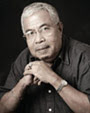
My photo
Suites #703, 7th Floor, Centre Wing, Metropolitan Square,DAMANSARA PERDANA, PETALING JAYA, Malaysia
Zodiac:Aries.A Senior citizen. Borned into the hardship of the Japenese Occupation in Malaya 1941-1945.